

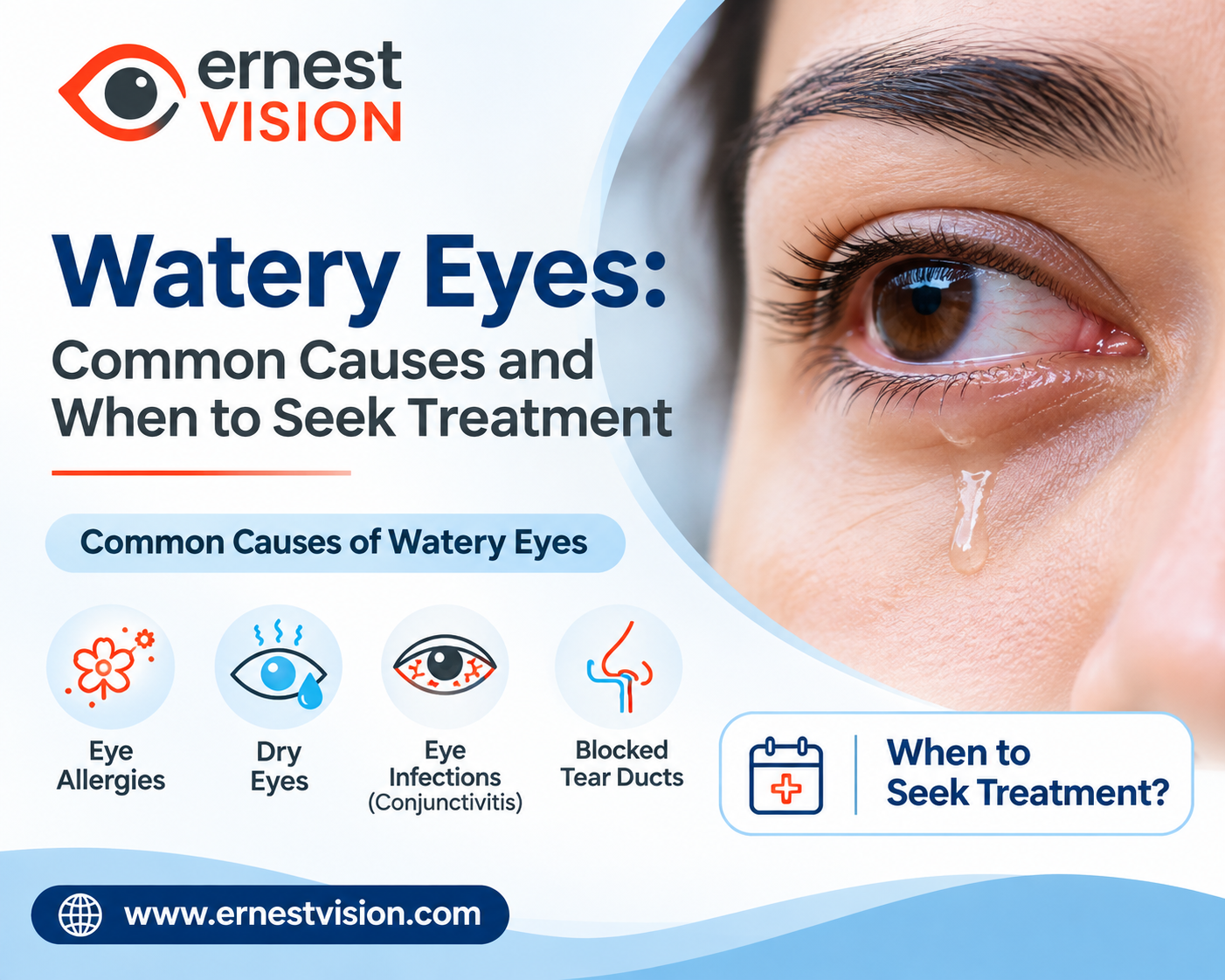
Watery Eyes: Common Causes and When to Seek Treatment
You step outside on a cold morning, sit in front of a computer or walk through a dusty street, and suddenly your eyes begin to water. Sometimes, the tearing continues even when there is no obvious reason. Watery eyes develop when excess tears build up because of increased tear production or a problem with the eye’s natural drainage system. Allergies, dry eyes, environmental irritation, infections, and blocked tear ducts are among the possible causes. Occasional watering is often harmless. However, frequent or unexplained tearing deserves attention, especially when it affects vision or everyday activities. Understanding when and how your eyes water can provide useful clues about the underlying problem.
Why Are My Eyes Watering Without Crying?
Tear production is a natural process that continues even when you are not crying. Tears keep the eyes comfortable, support surface lubrication, and wash away tiny irritants. Each time you close and reopen your eyelids, moisture spreads across the eye’s surface. Any remaining fluid drains through tiny channels near the inner corners of the eyes and eventually reaches the nasal cavity. When this process is disrupted, tears may collect around the eyelids or run down the cheeks. Eye-care professionals use the term epiphora to describe a condition in which tears overflow from the eyes.
There are two main explanations:
Irritation on the eye surface can trigger the release of more tears than usual.
The tear drainage system is not working effectively.
The Moorfields Eye Hospital guide to watering eyes provides further information about tear production and drainage problems.
Six Common Causes of Watery Eyes
1. Dry Eye Disease
It may sound surprising, but an eye that produces plenty of tears can still have a dryness problem. When the protective moisture layer becomes unstable, the eye surface may become irritated. This can trigger reflex tearing, causing an unexpected overflow of tears. People with dry eyes may also notice burning, a gritty feeling, or fluctuating visual clarity. The extra tears do not necessarily provide lasting lubrication.
2. Environmental Irritation
Dust, smoke, cold winds, and airborne pollutants can irritate the eye surface. Tearing is part of the eye's natural protective response to these conditions. For some people, the problem becomes more noticeable while travelling outdoors or spending time in rooms with direct airflow. If indoor cooling frequently causes discomfort, read our article on why eyes feel dry in air conditioning.
3. Eye Allergies
When the eyes react to allergens such as pollen, dust, or animal dander, watering may occur alongside itching and redness. Allergy-related symptoms often affect both eyes, although their severity can vary. Avoid rubbing your eyes, as this can make discomfort worse. If the problem keeps returning, an eye examination can help identify the cause and determine the right course of care.
4. Blocked Tear Ducts
Sometimes the problem is not excessive tear production but difficulty draining tears. A narrowed or obstructed tear duct may cause moisture to collect around the lower eyelid and spill onto the face. Persistent watering, particularly when it affects one eye, may require an examination of the tear drainage system.
5. Conjunctivitis and Other Eye Infections
Inflammation or infection affecting the eye can lead to increased tearing. Depending on the cause, additional symptoms may include redness, irritation, discharge, or eyelids that feel sticky after waking. Not every case of conjunctivitis is bacterial. A professional assessment is important before selecting medication.
6. Eyelid and Eyelash Problems
The position and movement of the eyelids influence how tears spread and drain. An eyelid that turns inward or outward may interfere with these functions. Eyelashes that grow towards the eye can also irritate its surface and stimulate tearing. These problems may need more than ordinary eye drops. For additional information about these conditions, refer to Mayo Clinic's overview of watery eyes.
What Can Other Symptoms Tell You?
Watering alone does not identify the exact cause. Paying attention to accompanying symptoms can make it easier to describe the problem during an eye examination.
| Symptoms or circumstances | Possible explanation |
|---|---|
| Watering with itching | Eye allergy |
| Burning and a sandy sensation | Dry-eye-related irritation |
| Persistent tears running down one cheek | Tear drainage problem |
| Redness with sticky discharge | Conjunctivitis or another infection |
| Watering outdoors in cold wind | Environmental irritation |
| Watering with severe pain or vision changes | A condition requiring urgent assessment |
These patterns are general clues rather than diagnostic rules. Different eye conditions can produce similar symptoms.
Watery Eyes in One Eye or Both Eyes
Whether tearing affects one eye or both is a useful detail to discuss with an eye-care professional.
When Only One Eye Waters
Persistent watering on one side may be associated with a local problem, such as an obstructed tear duct, an irritating eyelash, or a foreign particle. When one eye keeps watering for no clear reason, a professional eye check-up can help determine the underlying cause.
When Both Eyes Water
Watering in both eyes may occur with allergies, environmental exposure, or tear-film problems. However, the number of affected eyes alone cannot establish the diagnosis. The duration of symptoms, presence of discomfort, and circumstances in which watering occurs are also important.
Why Can Screen Time Make Your Eyes Water?
During concentrated screen work, blinking habits often change. This may affect the distribution of moisture across the eye surface and contribute to irritation. Someone working on a laptop for several hours may experience dryness initially, followed by unexpected tearing. The National Eye Institute's information on dry eye explains how tear-film problems and everyday environmental factors influence eye comfort. If these symptoms mainly occur during digital work, our article on eye discomfort after computer use explores the connection in more detail.
How Do Eye Doctors Identify the Cause?
An eye-care professional may begin by asking about the timing and pattern of the watering.
Useful information includes:
Whether the problem started suddenly or gradually.
Whether one eye or both are affected.
Whether symptoms become worse indoors or outdoors.
Whether itching, discharge, pain or visual changes are present.
Whether there is a history of eye injury, surgery or contact lens use.
Depending on the findings, the examination may include checking the eyelids, inspecting the cornea and assessing the tear film or drainage system.
Not everyone with watery eyes requires the same tests.
Watery Eyes Treatment Depends on the Cause
There is no single treatment that works for every watering eye.
Managing an allergy is different from addressing dry eye disease or a blocked tear duct.
| Underlying cause | Possible professional management |
|---|---|
| Dry-eye-related tearing | Suitable lubricating formulations and tear-film care |
| Eye allergy | Allergen management and appropriate allergy treatment |
| Bacterial infection | Antibiotic treatment when clinically indicated |
| Tear duct obstruction | Specialist evaluation and possible corrective procedure |
| Eyelid abnormalities | Management of the underlying eyelid problem |
| Environmental irritation | Reducing exposure to the identified irritant |
The NHS information on watering eyes also explains that treatment should be selected according to the underlying condition. Mild, temporary watering may settle without medical treatment. Persistent symptoms should not be managed indefinitely without identifying their cause.
Are Eye Drops for Watery Eyes Always Necessary?
Eye drops may be helpful in certain situations, but they are not a universal solution for excessive tearing. For example, artificial tears may be appropriate when dryness is responsible for reflex watering. Allergy-related symptoms may require a different approach. A drainage obstruction, on the other hand, may need specialist assessment rather than repeated application of drops. Antibiotic and steroid-containing eye drops should not be used simply because the eyes are watering or appear red. Our eye drops and ophthalmic formulation guide explains the differences between common categories of eye medicines.
Everyday Habits That May Reduce Eye Irritation
Although not every cause of tearing is preventable, a few practical habits may reduce avoidable discomfort.
Avoid rubbing irritated eyes.
Protect your eyes in dusty or windy environments.
Take regular breaks during extended screen work.
Avoid directing fans or air-conditioning vents towards your face.
Maintain appropriate hand and contact lens hygiene.
Avoid sharing eye-drop bottles or towels.
If watering continues despite changes in your surroundings, an underlying eye condition may need assessment.
When Should You Seek Medical Attention?
Occasional tearing during exposure to wind or dust may settle once the irritation stops. However, an appointment with an eye-care professional is advisable when watering keeps returning, interferes with daily activities or occurs without an identifiable reason. Seek urgent medical attention if excessive tearing is accompanied by:
Severe eye pain.
Sudden loss of vision or significant visual changes.
A serious eye injury or chemical exposure.
Marked sensitivity to light.
A painful, red eye, particularly if you wear contact lenses.
These symptoms should not be ignored or repeatedly treated with unprescribed eye drops.
Frequently Asked Questions
1. Why do my eyes water even when I am not crying?
Excessive tear production or reduced tear drainage can cause watering unrelated to emotions. Dry eyes, allergies and drainage abnormalities are possible explanations.
2. Can watery eyes be a sign of dry eyes?
Yes. Irritation caused by an unstable tear film can stimulate reflex tearing, even when the eye surface is not adequately lubricated.
3. Why do my eyes water more in winter?
Cold winds, dry outdoor air and heated indoor environments may irritate the eyes or contribute to tear evaporation.
4. Are runny eyes and tearing eyes the same thing?
Both are everyday descriptions of excessive eye watering. Epiphora is the medical term commonly used for this symptom.
5. Can watery eyes and redness occur together?
Yes. This combination may occur with allergies, infections, dryness or other forms of irritation. Pain or changes in vision require urgent assessment.
6. Can a blocked tear duct improve without surgery?
Some tear drainage problems may improve without an operation. Others require specialist intervention, depending on the patient's age and the nature of the obstruction.
7. Do watery eyes affect vision?
Excess tears can temporarily interfere with visual clarity. Persistent or sudden changes in vision should not be assumed to result solely from watering.
Look Beyond the Excess Tears
The next time your eyes begin to water, pay attention to when it happens, which eye is affected and whether other symptoms are present.
These observations can help distinguish a temporary environmental reaction from a problem that requires professional assessment.
Watery eyes are not always caused by excessive tear production. Sometimes, the difficulty lies in how tears protect the eye surface or drain away.
Finding the underlying reason is more useful than repeatedly trying to stop the symptom.