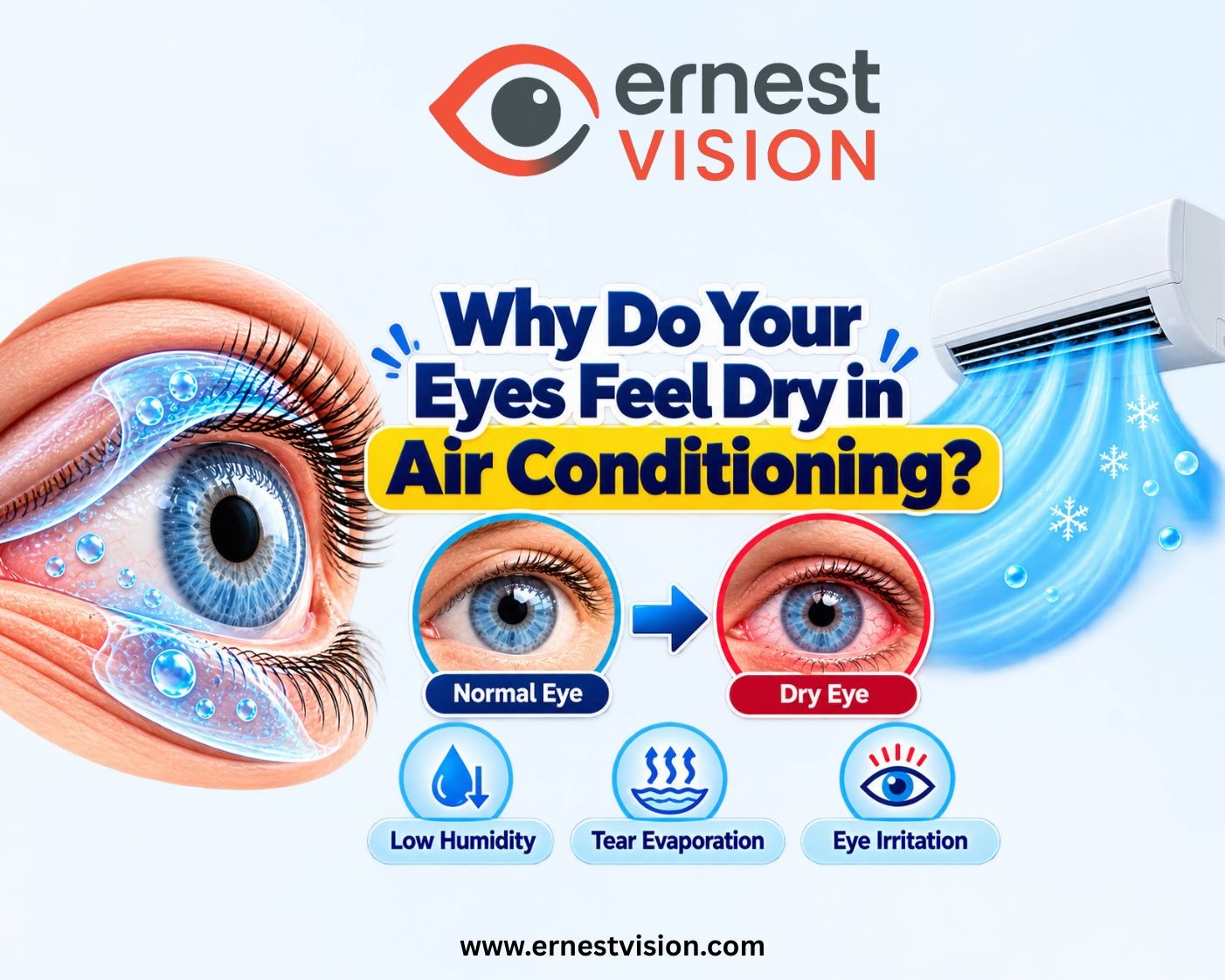
Why Do Your Eyes Feel Dry in Air Conditioning?
Air conditioning can make a hot room feel comfortable, especially during summer or long working hours. But have you ever noticed that your eyes start feeling dry, tired, or irritated after spending several hours in an air-conditioned room? You may experience a slight burning sensation, find yourself blinking more often, or feel as though something is stuck in your eyes. These symptoms can become more noticeable when you work on a computer or sit directly under an AC vent. Dry eyes in air conditioning are a common concern because cooled indoor air can reduce humidity and increase tear evaporation. Understanding how air conditioning affects your eyes can help you make simple changes to keep them comfortable. How Does Air Conditioning Affect Your Eyes?
Your eyes need a healthy layer of tears to stay moist and comfortable. Every time you blink, tears spread across the surface of your eyes, helping maintain a smooth protective layer. Air conditioning changes the indoor environment in ways that may affect this natural process. When an air conditioner removes moisture from the air, the surrounding environment may become drier. When cool air from an AC vent reaches your face, the moisture covering your eyes may dry out faster, leaving them feeling uncomfortable. As a result, the surface of your eyes may not remain properly lubricated. This explains why air conditioning and dry eyes are often connected, particularly among people who spend several hours in offices, bedrooms, shopping centres, or other air-conditioned spaces.
Why Do Your Eyes Feel Dry in Air Conditioning?
Your eyes may feel dry or irritated in an air-conditioned room for several reasons. Understanding these factors can help you reduce everyday eye discomfort.
1. Low Humidity in Air-Conditioned Rooms
Air conditioners often remove moisture from indoor air while cooling it. When humidity becomes too low, tears may evaporate faster than usual. This can leave your eyes feeling uncomfortable, particularly after prolonged exposure. People who already experience dry eye symptoms may notice increased irritation in these conditions. 2. Direct Airflow Toward Your Face
Sitting directly in front of an AC vent can expose your eyes to a continuous stream of moving air. This airflow may increase tear evaporation, even when the room temperature feels pleasant. If your eyes become uncomfortable while sitting near an air conditioner, changing your seating position or redirecting the vent may help.
3. Reduced Blinking During Screen Time
Many people spend hours using computers, smartphones, or tablets in air-conditioned rooms. While using a computer or mobile phone, people often become so focused on the screen that they blink less often or do not close their eyelids completely. This reduces the regular spreading of tears across the eye surface. The combination of screen time and dry eyes can make discomfort more noticeable in air-conditioned offices. 4. Existing Dry Eye Conditions
Some individuals already have difficulty producing enough tears or maintaining a stable tear film. In these cases, an air-conditioned environment may worsen existing discomfort. Age-related changes, certain medications, contact lens use, and some medical conditions may also contribute to dry eye problems.
5. Long Hours in Air-Conditioned Spaces
Spending a short time in a cooled room may not cause noticeable discomfort. However, remaining in the same dry environment for many hours can increase exposure to conditions that encourage tear evaporation. This is one reason dry eyes in AC rooms may become more noticeable toward the end of a working day.
Common Symptoms of Dry Eyes Caused by Air Conditioning
Not everyone experiences the same symptoms. Some people notice mild discomfort, while others may find it difficult to concentrate on everyday activities.
Common dry eye symptoms include:
- Burning or stinging sensations
- A gritty feeling, as though sand is present in the eyes
- Redness or irritation
- Tired or uncomfortable eyes
- Temporary blurred or fluctuating vision
- Sensitivity to light
- Difficulty wearing contact lenses
- Excessive watering of the eyes
Watery eyes may sound surprising, but irritation from dryness can sometimes trigger reflex tear production. These symptoms are not always caused by air conditioning. Allergies, eyelid problems, infections, and other eye conditions can produce similar complaints.
Why Do Your Eyes Feel Dry While Working in an AC Office?
Modern offices often combine continuous air conditioning with extended computer use. Imagine someone working on a laptop for eight hours in an air-conditioned office. While concentrating on emails, spreadsheets, or meetings, they may blink less often. At the same time, dry indoor air encourages tears to evaporate. By the afternoon, their eyes may feel tired, gritty, or irritated. This combination of environmental conditions and screen habits can contribute to dry eyes while working on a computer. Taking regular screen breaks, blinking fully, and avoiding direct airflow may help improve comfort.
Can Sleeping With Air Conditioning Cause Dry Eyes?
Some people wake up with uncomfortable, gritty, or irritated eyes after sleeping in an air-conditioned bedroom. This may happen when indoor humidity is low or when airflow from the AC reaches the face throughout the night. People who sleep with their eyelids partly open may be especially vulnerable to overnight dryness. If you frequently experience dry eyes at night with AC, try redirecting the airflow away from your bed and checking the room's humidity. Persistent morning dryness should be assessed by an eye care professional.
How to Prevent Dry Eyes in Air Conditioning
You do not necessarily need to stop using air conditioning to reduce eye discomfort. Small adjustments to your surroundings and daily habits may help.
1. Avoid Direct AC Airflow
Position your chair or bed so that cold air does not blow directly toward your face. Adjusting the direction of the AC vent can help reduce exposure to continuous airflow.
2. Maintain Comfortable Indoor Humidity
Very dry indoor air can increase tear evaporation. A properly maintained humidifier may help when humidity is low. An indoor hygrometer can help you monitor moisture levels. A relative humidity range of around 30–50% is often used for indoor comfort, although appropriate levels depend on the building and conditions. Avoid excessive humidity, which can encourage mould growth.
3. Follow the 20-20-20 Rule
If you spend long hours looking at screens, try the 20-20-20 rule. Every 20 minutes, look at something approximately 20 feet away for 20 seconds. This habit may reduce screen-related visual fatigue. Remember to blink fully during breaks, as the rule alone does not replace proper dry eye care.
4. Blink More Frequently
Blinking helps distribute tears evenly across your eyes. When using digital devices, consciously blinking fully from time to time may help maintain tear coverage.
5. Consider Lubricating Eye Drops
Artificial tears may provide temporary relief for some people experiencing dryness. Different formulations are available, and the appropriate choice depends on individual symptoms and eye health. If you need drops frequently, an eye care professional may recommend a suitable preservative-free option. Avoid using redness-relief drops repeatedly without medical advice.
6. Take Regular Breaks From Screens
Continuous screen use can contribute to eye discomfort.
Short breaks allow you to relax your focus and restore normal blinking habits.
Positioning your monitor slightly below eye level may also reduce exposure of the eye surface.
7. Maintain Good Contact Lens Habits
Contact lens users may experience additional discomfort in dry environments.
Follow recommended lens-wearing schedules, cleaning instructions, and replacement intervals.
If your eyes become irritated, remove your lenses when safe to do so and seek professional advice if symptoms persist.
Air Conditioning vs Natural Ventilation: Which Is Better for Dry Eyes?
Neither environment is automatically better for everyone.
| Air-conditioned environment | Naturally ventilated environment |
|---|
| May have reduced humidity | Humidity depends on outdoor conditions |
| AC vents can create direct airflow | Fans and wind can also increase evaporation |
| Temperature is usually controlled | Temperature may vary |
| Dryness may increase during prolonged exposure | Dust, pollen, and pollution may trigger irritation |
The important factors are air humidity, airflow, environmental irritants, and your individual eye health.
When Should You See an Eye Doctor?
Occasional mild dryness may improve after adjusting your environment or taking breaks.
However, you should consult an eye care professional if you experience:
Frequent or persistent eye dryness
Repeated redness or irritation
Discomfort that affects work or sleep
Difficulty wearing contact lenses
Symptoms that do not improve with basic care