
Medical Equipment Import Documents: Dubai Buyer's Checklist
Importing medical equipment into Dubai, UAE, requires careful planning, proper documentation, and an understanding of the applicable import regulations. Buyers must also confirm that the equipment meets applicable safety requirements and has the necessary paperwork. Understanding medical equipment import documents helps Dubai hospitals, distributors, clinics, and healthcare businesses avoid missing records, customs delays, and unexpected compliance issues. Whether purchasing diagnostic instruments, surgical equipment, or hospital devices from overseas suppliers, checking documents before shipment is an important part of responsible procurement.
Why Are Import Documents Important for Medical Equipment?
Medical equipment is often used in situations where accurate performance and patient safety matter. A missing certificate, incorrect product description, or incomplete shipping document can create problems during importation. A proper medical equipment import checklist helps buyers confirm product identity, regulatory compliance, and shipment details. It also makes communication easier between manufacturers, exporters, customs agents, and UAE healthcare organizations.
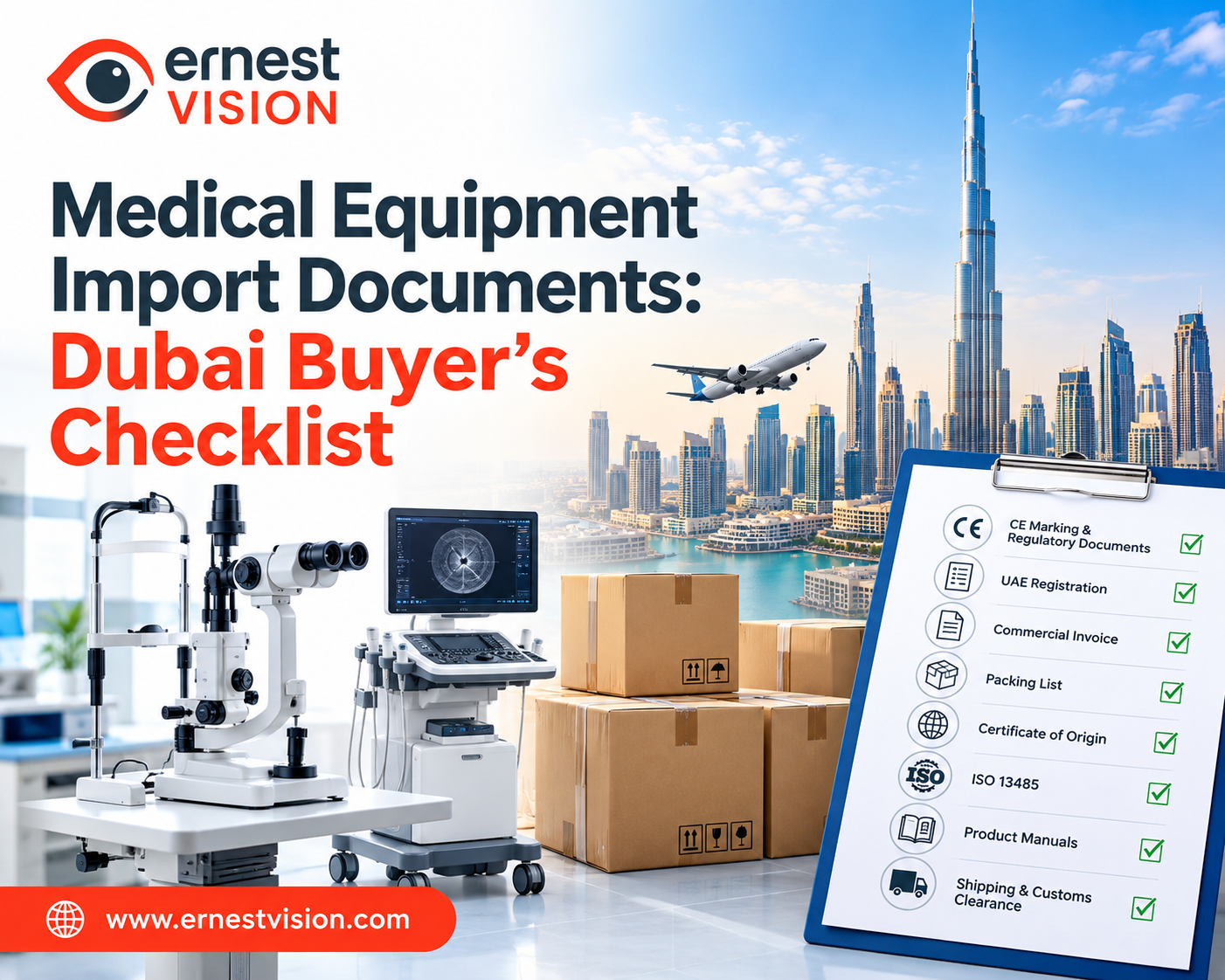
1. CE Marking and UAE Regulatory Documentation
One of the first checks involves the product's conformity marking and regulatory documentation. For medical devices imported into Dubai, the applicable requirements depend on the product classification and UAE medical device regulations.
CE Marking: Indicates compliance with relevant European requirements. CE documentation may support a UAE regulatory submission, but CE marking alone does not automatically authorize a medical device for sale in Dubai.
UAE Regulatory Approval: Medical devices may require registration or other applicable approvals from the relevant UAE authorities before they can be placed on the market. Buyers should check the relevant Declaration of Conformity and any required conformity assessment certificates. A marking alone does not establish that every regulatory requirement has been met.
2. UAE Medical Device Registration and Local Representative Details
The Emirates Drug Establishment (EDE) is responsible for overseeing medical device regulations in the UAE, along with other relevant authorities where required. Under the UAE Medical Device Regulations, medical devices may require registration or applicable regulatory approval before being placed on the UAE market.
Buyers should confirm:
- Whether the device has the required UAE registration or approval.
- Whether the manufacturer and product details are correct.
- Where applicable, whether an authorized local representative or licensed establishment is involved.
Manufacturers based outside the UAE may need to work with an appropriately licensed local entity for applicable medical device registration and import procedures. Dubai buyers should also check any relevant local healthcare authority requirements for their intended use.
3. Commercial Invoice
A commercial invoice for medical equipment provides essential information about the transaction. It normally includes the exporter and importer details, equipment description, quantity, unit price, total value, currency, and country of origin. For example, when importing an ophthalmic diagnostic device, the invoice should identify the equipment clearly rather than using a broad description such as medical goods. Accurate invoice information supports customs declarations and helps prevent misunderstandings about the shipment.
4. Packing List
A packing list explains how the equipment has been packed for transportation. It generally includes the number of cartons, package contents, gross and net weight, dimensions, and identifying marks. For larger equipment, such as diagnostic systems or examination units, buyers should also check whether accessories and separate components are included. Comparing the packing list with the purchase order helps identify missing items before dispatch.
5. Certificate of Origin
A Certificate of Origin for Medical Equipment identifies the country in which the goods are made under the applicable rules of origin. This information may be important for customs procedures, trade arrangements, or buyer requirements. A Certificate of Origin is commonly required for commercial imports into Dubai, subject to applicable customs procedures and exemptions. Buyers should confirm whether formal origin evidence is required and whether any preferential tariff treatment is being claimed.
6. ISO 13485 and Quality Documentation
ISO 13485 is an internationally recognized standard for quality management in medical device organizations. When reviewing an overseas manufacturer, buyers may request an ISO 13485 certificate to understand the scope of its quality management system. Other useful medical equipment supplier documents may include product specifications, inspection reports, test records, and relevant quality certificates. An ISO 13485 certificate does not replace the required medical device conformity assessment or market registration.
7. Product Manuals and Technical Information
Medical equipment should arrive with suitable instructions and supporting technical information.
Depending on the product, buyers may need:
- Instructions for use and operating manuals.
- Installation and maintenance guidance.
- Electrical specifications and safety information.
- Calibration or performance records, where relevant.
- Warranty and service documentation.
These documents help buyers understand the installation process, equipment operation, maintenance needs, and technical support requirements.
8. Shipping and Customs Clearance Documents
Proper medical equipment customs clearance depends on accurate transport and import information. Depending on the shipping method, the required transport document may be an air waybill, bill of lading, or another appropriate record. Dubai importers should also check their customs registration requirements, HS code classification, and customs declaration responsibilities. A Dubai Customs business registration and customs code are generally required for businesses conducting commercial imports through Dubai Customs, subject to applicable procedures. The exact paperwork and customs charges depend on the product, shipment, and import arrangements.
Common Documentation Mistakes Dubai Buyers Should Avoid
Even experienced buyers can encounter problems when they overlook important details. Common mistakes include accepting expired certificates, overlooking model-number differences, using unclear invoice descriptions, and assuming that CE marking removes all UAE registration requirements. Another mistake is checking documents only after payment or shipment. Reviewing the relevant paperwork before confirming an order allows buyers more time to resolve discrepancies with their supplier.
What Should Dubai Buyers Check Before Choosing a Medical Equipment Supplier?
Before placing an international order, buyers should confirm the supplier's business identity and its relationship with the manufacturer. They should request documents relevant to the specific equipment model rather than relying solely on general company certificates. For specialized equipment, buyers should also discuss installation support, spare parts, technical assistance, and warranty conditions. These inspections help healthcare procurement teams make better purchasing decisions.
Frequently Asked Questions
1. What documents are required to import medical equipment into Dubai?
Common documents include a commercial invoice, packing list, transport document, and customs declaration. Medical devices may also need applicable conformity, registration, and import approval documentation.
2. Is CE certification accepted for medical equipment in Dubai?
CE certification may support the regulatory assessment of medical devices in the UAE. However, CE marking alone does not replace applicable UAE registration or approval requirements.
3. Is UAE registration required for imported medical devices?
Medical devices may require registration or other applicable regulatory approvals before being placed on the UAE market. Requirements depend on the device and its intended use.
4. Do Dubai medical equipment importers need a customs code?
Businesses importing goods commercially through Dubai Customs generally need appropriate customs registration and a customs code.
5. Why should buyers check ISO 13485 certification?
ISO 13485 provides information about a manufacturer's medical device quality management system. Buyers should verify the certificate's validity and scope.
6. Can medical equipment be imported without a Certificate of Origin?
It may be possible in certain circumstances, depending on the shipment and customs requirements. Buyers should confirm what origin evidence is needed before dispatch.
Conclusion
Checking the correct medical equipment import documents is an important part of purchasing healthcare equipment from international suppliers. Dubai buyers should review conformity records, registration details, commercial paperwork, technical information, and customs requirements before shipment. A careful documentation process supports smoother imports, clearer supplier communication, and better procurement decisions.