
Common Eye Problems After Age 40
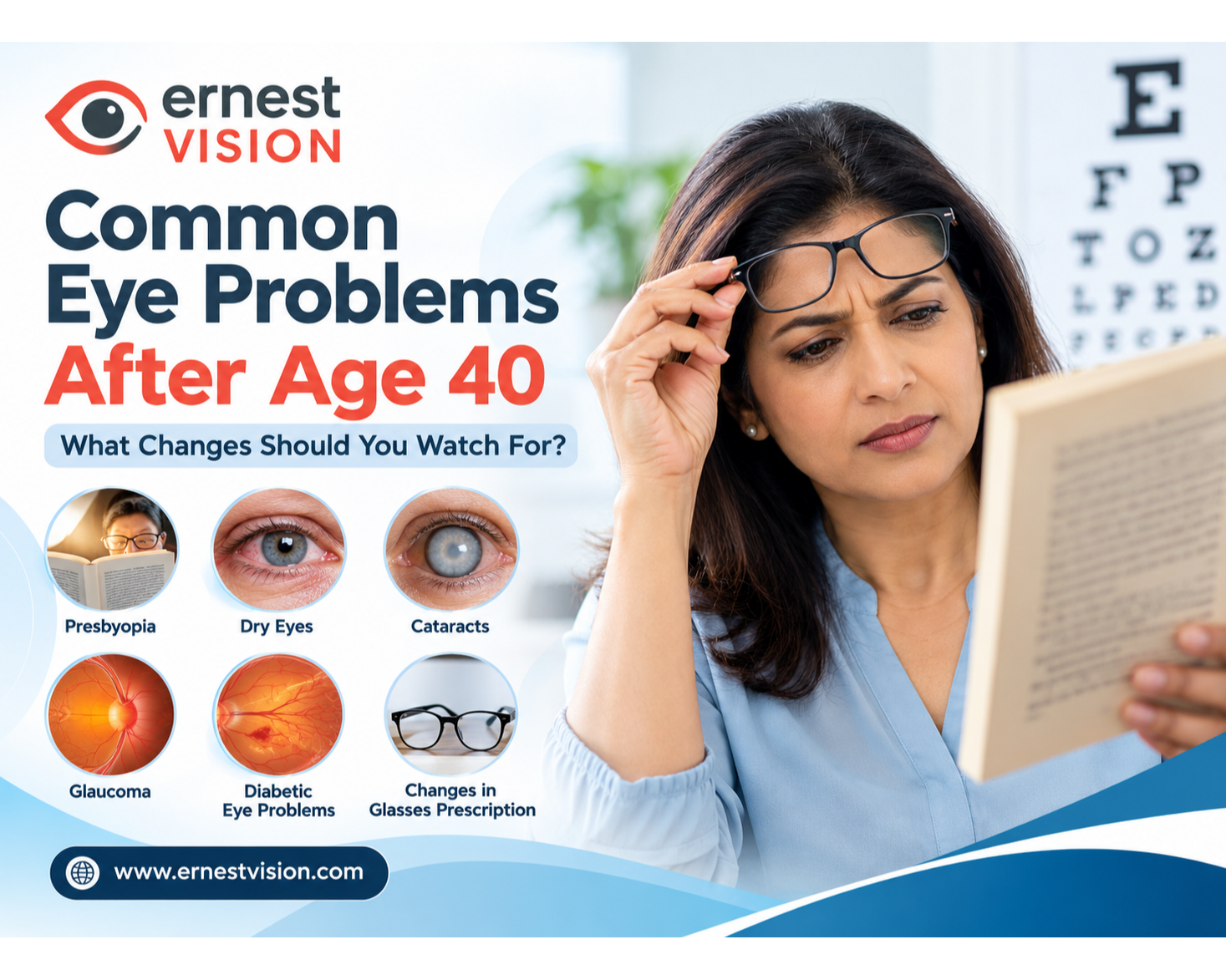
If reading a restaurant menu suddenly feels easier when you hold it a little farther away, you are not alone. For many people, the 40s are when small changes in eyesight first become noticeable. Maybe the text on your phone no longer looks as sharp up close. You may need brighter light while reading, your eyes may feel tired after a long day at the computer, or driving at night may seem more difficult than it used to. Many of these changes happen naturally as the eyes age. Others, however, can be signs of an eye condition that deserves attention. Knowing the common eye problems after age 40 can help you understand what may be happening and when an eye check-up is a good idea.
Why Does Your Vision Start Feeling Different in Your 40s?
Our eyes do not suddenly change on our 40th birthday. The aging process is gradual, but around this age some changes become easier to notice. One of the most significant changes happens to the natural lens inside the eye. When we are younger, this lens is flexible and can easily adjust its focus between distant and nearby objects. As we get older, it gradually becomes less flexible. Other changes may affect the tear film, sensitivity to light and the overall health of the eye. This is why **eye care after 40** involves more than simply checking whether your glasses prescription has changed.
Finding Small Print Harder to Read? Presbyopia May Be the Reason
One of the first vision changes after 40 that many people notice is difficulty reading things close to them.
This condition is called presbyopia.
You might notice yourself moving a book or phone farther away to make the words clearer. Reading very small print can become frustrating, particularly in dim lighting.
Other signs may include:
- Blurred vision while reading
- Difficulty focusing on close objects
- Tired eyes after reading or working on a computer
- Needing brighter light for close-up tasks
- Headaches after prolonged reading
Presbyopia after 40 is a normal part of ageing. Depending on your eyesight and daily activities, an eye care professional may suggest reading glasses, prescription lenses, contact lenses or another suitable option.
2. Dry Eyes May Become More Noticeable
Dry eyes do not always feel “dry.” Some people experience burning or stinging, while others notice redness, watering or a sensation that something is stuck in the eye. Age-related changes in tear production can make dry eyes after 40 more noticeable. Daily habits can also play a role. When we spend a long time looking at a laptop or phone, we may blink less often. Air conditioning, dry environments and certain medicines can also contribute to eye discomfort. If the problem happens occasionally, simple habits such as taking screen breaks and blinking more frequently may help. If dryness, redness or blurry vision keeps returning, it is better to have the cause checked rather than regularly using eye drops without professional advice.
3. Cataracts Can Develop Gradually
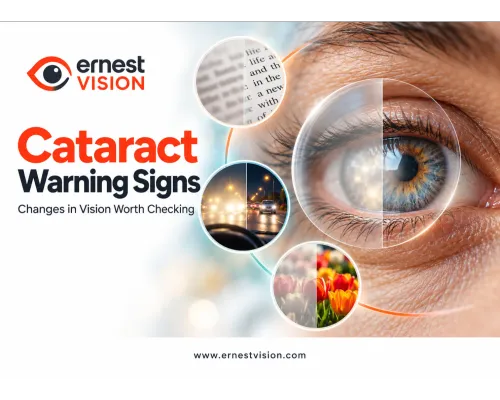
A cataract forms when the normally clear lens inside the eye starts becoming cloudy. Cataracts usually develop slowly. In the beginning, you may not notice much difference at all. As the cloudiness increases, everyday activities such as reading or driving at night can become more difficult.
- Cloudy or blurred vision
- Increased sensitivity to glare
- Difficulty seeing clearly at night
- Bright headlights becoming uncomfortable
- Colors appearing less vivid
- Needing more light while reading
Having a cataract does not necessarily mean you need surgery straight away. An ophthalmologist can examine the eye and determine how much the cataract is affecting your vision and normal activities.
4. Glaucoma May Not Give an Early Warning
Glaucoma is particularly important to know about because some common types can progress quietly. It affects the optic nerve, which transmits visual information from the eye to the brain. In its early stages, a person may feel completely fine and notice no obvious change in vision. That is why waiting for clear glaucoma symptoms is not a reliable way to detect the condition. An eye examination allows an eye care professional to look at the optic nerve and assess eye pressure along with other factors. People who have a family history of glaucoma or other known risk factors may be advised to have their eyes examined more regularly.
5. Your Old Glasses May No Longer Be Right for You
Sometimes the explanation for blurry vision after 40 is relatively simple: your vision prescription has changed. A pair of glasses that worked perfectly a few years ago may no longer give you comfortable vision. You may begin to experience headaches, squint, or struggle to shift your attention between your computer screen and nearby objects. Instead of assuming that these problems are simply due to getting older, consider getting your vision checked. A routine examination can determine whether you need a different prescription or whether something else is affecting your eyesight.
6. Diabetes Can Affect the Eyes
People living with diabetes need to pay particular attention to their eye health. Diabetes can eventually damage the small blood vessels in the retina, which is the light-sensitive tissue at the back of the eye. This can lead to diabetic retinopathy. One of the reasons regular examinations matter is that diabetic eye disease may not cause noticeable symptoms in its early stages. Diabetes can also increase the risk of developing other eye diseases, such as cataracts and glaucoma. Managing blood sugar, blood pressure and cholesterol as advised by your healthcare professional, along with following the recommended schedule for eye examinations, can play an important role in protecting vision.
Eye Symptoms You Should Take Seriously
Not every change in eyesight is an emergency. A gradual need for reading glasses, for example, is very different from suddenly losing part of your vision.
Seek prompt medicalattention if you suddenly experience:
- Loss or majorreduction of vision
- A sudden increase in flashes or floaters
- A dark shadow or curtain moving across your vision
- Severe eye pain
- A significant eye injury
- A sudden unexplained change in eyesight
Sudden symptoms should not be dismissed as a normal part of ageing.
Simple Ways to Care for Your Eyes After 40
Looking after your eyes does not require a complicated routine. Take breaks when spending long periods in front of screens. Make sure you have enough light when reading or doing close work. Outdoors, use sunglasses that provide appropriate UV protection. Avoid smoking and work with your healthcare provider to manage conditions such as diabetes and high blood pressure. It is also worth remembering that clear vision does not always mean that the eyes are completely healthy. Certain eye conditions can begin before you notice any symptoms. A comprehensive eye exam after age 40 can check not only how clearly you see but also the health of different parts of your eyes.
Frequently Asked Questions
1. Why has reading small text become harder after 40?
A common reason is presbyopia. As the natural lens of the eye becomes less flexible with age, focusing on nearby text becomes more difficult.
2. Why do I keep moving my phone farther away to read?
This is one of the typical signs of presbyopia after 40. Holding the screen farther away can temporarily make the text easier to focus on.
3. Can ageing make my eyes feel dry or irritated?
Yes. Tear production and tear quality can change with age. Screen use, air conditioning, medicines and environmental conditions may also contribute to dry-eye symptoms.
4. Does having a cataract mean I need surgery immediately?
Not necessarily. Cataracts often progress slowly. The need for treatment depends on how much the cataract affects your eyesight and everyday activities.
5. Can I have glaucoma even if my vision seems normal?
Yes. Some types of glaucoma can develop without noticeable symptoms during the early stages. This is why eye examinations are important, particularly for people with known risk factors.
6. Why am I finding night driving more difficult than before?
Changes in your glasses prescription, increased glare sensitivity, cataracts and other eye conditions can all make night driving more challenging. An eye examination can help identify the reason.
7. How often should people over 40 get their eyes checked?
There is no single schedule that is right for everyone. Your age, medical history, family history, existing eye conditions and other risk factors can affect how often an examination is recommended.
8. Can diabetes damage eyesight without causing early symptoms?
Yes. Diabetic retinopathy may develop before obvious vision problems appear. People with diabetes should follow the eye-examination schedule recommended by their healthcare professional.