
Cataract Warning Signs You Might Notice in Daily Life
You may first notice a problem while reading in a dim room or driving after sunset. Perhaps oncoming headlights seem brighter than they used to, or your glasses no longer make everything look quite clear. These changes do not automatically mean you have cataracts, but they are good reasons to have your eyes checked.
A cataract forms when the normally clear lens inside the eye becomes less transparent. The change often happens slowly, making it easy to overlook a gradual decline in vision. In the earliest stage, you may not notice any difference at all.
Changes You Might Observe in Daily Life
The world looks slightly hazy
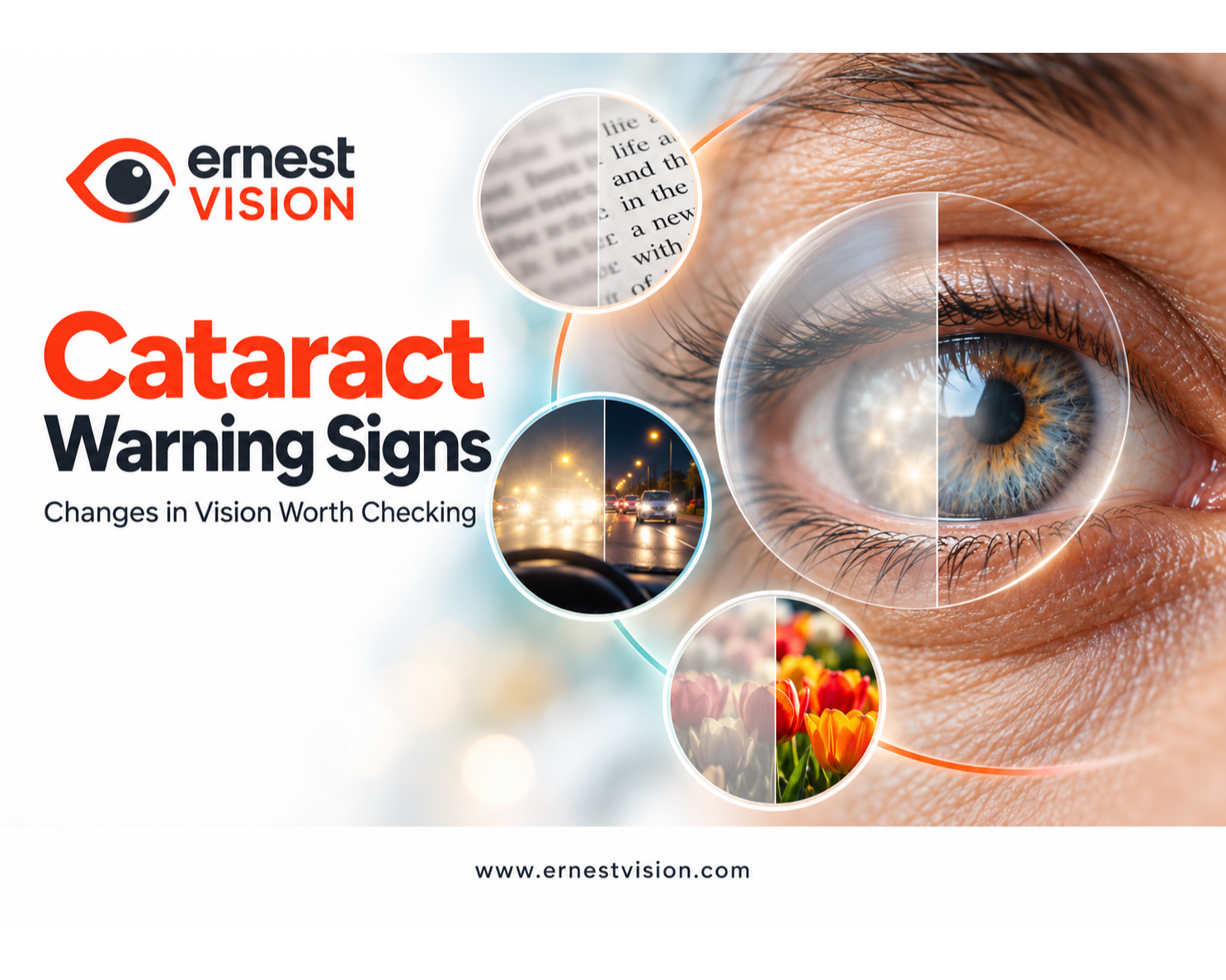
A window can be cleaned, but the view still looks blurred. With a cataract, the cloudiness is inside the eye’s lens. Objects may seem less sharp even when you are wearing your usual glasses.
A window can be cleaned, but the view still looks blurred. With a cataract, the cloudiness is inside the eye’s lens. Objects may seem less sharp even when you are wearing your usual glasses.
Night driving feels less comfortable
You may find it harder to see road signs or judge what is ahead in low light. Headlights and streetlights can also produce distracting glare or halos.
You require more light to read
A book, medicine label or phone screen may be easier to see under a brighter lamp. This change is especially worth discussing with an eye doctor if it continues despite an updated glasses prescription.
Colours seem duller
Whites may appear less bright and other colours may lose some of their vividness. Because this happens gradually, it can be difficult to recognise on your own.
Your glasses prescription keeps changing
Needing new glasses once does not mean you have a cataract. However, repeated prescription changes alongside cloudy vision or glare are worth mentioning at an eye exam.
You see overlapping images in one eye
Some people experience double or ghosted vision in a single eye. Cataracts are one possible cause, but an eye care professional needs to assess the symptom.
Do Cataracts Only Affect Older Adults?
Age is a common factor, but cataracts can also occur in younger people. Diabetes, an eye injury, previous eye surgery and long-term use of certain steroid medicines can increase the risk. A baby can also be born with a cataract. Your age alone cannot confirm or rule out the condition. What matters is getting a proper assessment when your vision changes.
When Should You Make an Appointment?
Arrange an eye exam if blurry vision, glare, or difficulty seeing at night persists or starts affecting your routine. Mention any trouble with reading, work or driving. You can also tell your eye doctor about diabetes, previous eye injuries and the medicines you use. Sudden vision loss, flashes of light or severe eye pain need urgent medical attention. Cataracts generally develop slowly, so do not wait for a routine cataract appointment if a vision change happens suddenly.
How Does an Eye Doctor Check for Cataracts?
Your eye doctor may check how clearly you can read an eye chart and examine the front of your eye with a specialised microscope called a slit lamp. They may also use dilating drops to look more closely at the lens and other parts of the eye. The examination helps determine whether a cataract is present and whether something else may be contributing to your symptoms.
Will You Need Surgery Straight Away?
A cataract diagnosis does not usually require immediate surgery. If your vision still allows you to manage daily activities, your eye doctor may suggest monitoring it. Better lighting or updated glasses may help you see more comfortably for a time. Surgery is the only technique to remove a cataract. If your vision begins to interfere with activities that matter to you, an ophthalmologist can explain the procedure, lens choices, benefits and risks for your situation.
Frequently Asked Questions
What is usually the first sign of a cataract?
Everyone does not have a single first sign. Some people notice cloudy vision or glare, while others have no noticeable symptoms at an early stage.
Can cataracts cause difficulty driving at night?
Yes. Reduced night vision and glare from headlights can make driving after dark harder.
Can an eye test detect a cataract before I notice symptoms?
Yes. An eye doctor can check for cataracts during a dilated eye exam.
Can glasses cure a cataract?
No. A new prescription may improve vision in the early stages, but it does not remove the cloudy lens.
No. A new prescription may improve vision in the early stages, but it does not remove the cloudy lens.
A Small Change Is Worth Checking
Slow changes in sight are easy to put down to age or tiredness. If your vision is less clear, night driving has become difficult or lights cause more glare than before, schedule an eye examination. Finding the cause is the first step towards deciding what care you need.