
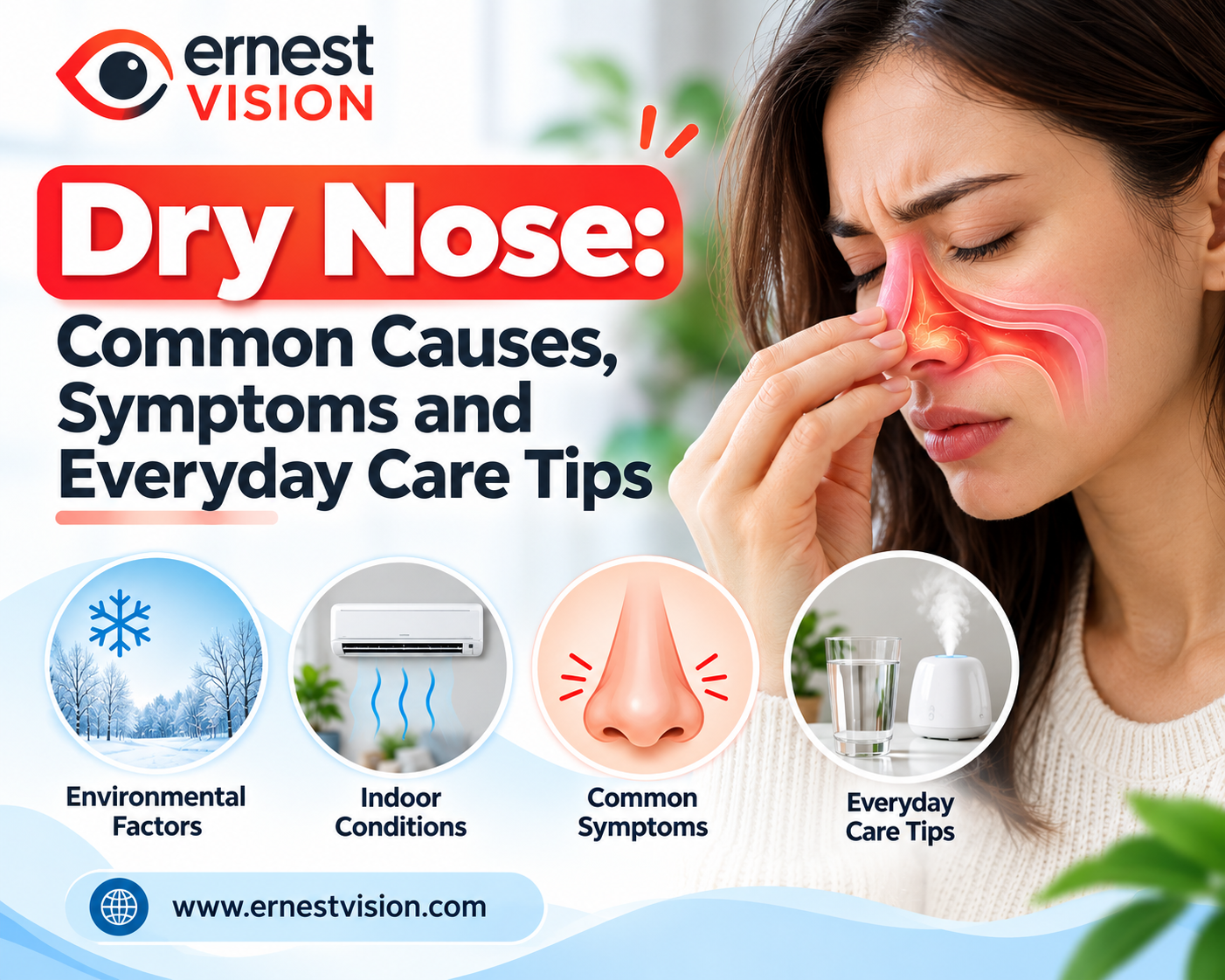
Dry Nose: Common Causes, Symptoms and Everyday Care Tips
A dry nose can feel uncomfortable, irritated, itchy, or sometimes even sore. You may notice that the inside of your nose feels dry, especially after spending time in air-conditioned rooms, during winter, or when the weather has low humidity. Nasal dryness can happen from time to time, especially when the nose is exposed to dry air, changing weather, or certain daily environmental factors. However, when dryness continues for a long time, causes frequent nosebleeds, or comes with other unusual symptoms, it is worth discussing with a healthcare professional.
What Does a Dry Nose Feel Like?
The inside of the nose contains a delicate lining that normally stays moist. This moisture helps the nose perform its everyday functions, including trapping dust and other particles from the air. When this lining loses moisture, the dry nose inside sensation may develop. Some people experience only mild dryness, while others notice irritation or crusting.
Common dry nose symptoms may include:
- Dry or tight feeling inside the nostrils
- Itching or irritation
- Mild burning or soreness
- Crusting inside the nose
- Increased sensitivity inside the nostrils
- Occasional minor nosebleeds
- A stuffy or dry nose block sensation
- Dryness extending to the nose and throat
Nasal dryness can happen for different reasons, and symptoms that are severe or continue for a long time may need medical attention.
Why Is My Nose So Dry?
A dry nose can develop for several reasons, and the exact cause may differ from one person to another. Nasal dryness can be influenced by the environment, lifestyle, hydration, allergies, illnesses, or certain medications.
Some of the most common dry nose causes include the following.
1. Dry Weather
When the air becomes dry, the delicate lining inside the nose may lose moisture and start to feel irritated or uncomfortable. This problem is often more noticeable during winter, as cold weather combined with indoor heating can leave the nasal passages feeling unusually dry.
2. Air Conditioning
Have you noticed a dry nose from air conditioning? Air-conditioned environments can have relatively low humidity. Spending many hours in an air-conditioned office, bedroom, car, or other enclosed space may therefore contribute to nasal dryness in some people.
3. Indoor Heating
Heaters can reduce indoor humidity, especially during colder months. Long periods in heated rooms may contribute to dryness of the nose, skin, eyes, or throat.
4. Not Drinking Enough Fluids
Overall hydration can influence how dry the mouth and throat feel. Drinking adequate fluids throughout the day is a sensible part of general self-care, although nasal dryness can still occur even when you are well hydrated.
5. Frequent Nose Blowing
Repeatedly blowing or wiping your nose during a cold or allergy episode can irritate the delicate skin around and inside the nostrils. This may leave the nose feeling dry or sore.
6. Allergies and Irritants
Dust, smoke, pollution, fragrances, and other airborne irritants can affect the nasal passages. Allergies may also lead to frequent sneezing, wiping, and nose blowing, which can further irritate the nose.
7. Certain Medicines
Some medicines can contribute to dryness as a side effect. In addition, some types of medicated nasal sprays can cause irritation or dryness, particularly if they are used incorrectly or for longer than recommended. Do not stop a prescribed medicine because of nasal dryness without speaking with your healthcare professional.
Why Is the Inside of My Nose Dry?
People search for why is the inside of my nose dry? A dry nose often means that the tissues inside the nasal passages have lost some of their natural moisture, rather than the outer skin of the nose being dry. The nasal passages normally produce mucus that helps maintain moisture. Changes in humidity, exposure to dry air, frequent nose blowing, irritation, and other factors can disturb this moisture balance. You might notice dryness more strongly around the entrance of the nostrils, where crusting or mild irritation can occur. Avoid picking or aggressively removing crusts because this can damage the delicate lining and lead to bleeding.
Common Reasons for a Dry Nose at Night
A dry nose at night can sometimes be related to the bedroom environment.
Sleeping with an air conditioner, heater, or fan running for long periods may contribute to a dry environment. Mouth breathing from congestion may also be linked to waking up with a dry nose and throat. If you regularly wake with significant nasal blockage, snoring, breathing difficulties, or persistent dryness, discussing the symptoms with a healthcare professional can help identify the underlying cause.
Can You Have a Dry Nose With Congestion?
Yes. Dry nose with congestion may seem contradictory, but a nose can feel blocked even when there is little runny mucus. Swelling or irritation of the tissues inside the nasal passages can contribute to a stuffy sensation. Allergies, environmental irritants, respiratory infections, and other conditions may also cause congestion. Persistent congestion should be evaluated rather than repeatedly self-treating it without knowing the cause.
What Helps a Dry Nose?
For mild dryness associated with environmental conditions, simple changes may improve comfort.
Increase Indoor Humidity
Using a humidifier can help maintain comfortable moisture levels when the air in your home or workspace feels too dry. Humidifiers need regular cleaning according to the manufacturer's instructions because poorly maintained units can allow microorganisms or mold to grow.
Drink Enough Fluids
Regular fluid intake supports normal hydration. Water is a simple choice throughout the day.
Reduce Exposure to Irritants
Smoke, dust, strong fragrances, and polluted air can irritate sensitive nasal passages. Reducing exposure where practical may help.
Be Gentle With Your Nose
Avoid excessive nose blowing, picking, or repeatedly rubbing the inside of the nostrils. These simple measures can form part of an everyday dry nose home remedy approach when symptoms are mild and caused by environmental dryness.
How to Moisturize a Dry Nose
People looking for dry nose relief often want a simple way to restore moisture. One commonly used option is a saline nasal spray. Saline products generally contain a salt-water solution designed to help moisturize or rinse the nasal passages. Among common nasal spray uses, saline sprays may be used to help keep dry nasal passages moist or to gently clear mucus and environmental particles. A normal saline nasal spray is different from medicated nasal sprays containing decongestants, corticosteroids, antihistamines, or other active medicines. Because different nasal products have different purposes and instructions, check the label and use the product as directed. If you are unsure which type is appropriate, ask a pharmacist or healthcare professional.
How to Use a Nasal Spray Properly
Correct technique can help the spray reach the nasal passage while reducing unnecessary irritation. In general, follow the specific instructions supplied with the product. Depending on the type of spray, instructions may involve gently clearing the nose first, keeping the head in the recommended position, placing the nozzle just inside the nostril, and directing it appropriately rather than forcefully spraying. Avoid sharing nasal spray bottles with other people. For medicated nasal sprays, follow the prescribed or labelled dose rather than increasing how often you use them because your nose feels uncomfortable.
How to Prevent Dry Nose
You cannot prevent every episode of nasal dryness, but everyday habits may reduce irritation. Try to maintain comfortable indoor humidity, stay adequately hydrated, limit unnecessary exposure to smoke and other irritants, avoid picking the nose, and treat the nasal lining gently when blowing your nose. During winter or when spending long periods in heated or air-conditioned environments, paying attention to indoor humidity may be particularly useful.
When Should You See a Doctor?
A mild dry nose caused by temporary environmental conditions often improves with basic care. However, medical advice is appropriate if the problem is persistent, repeatedly returns, becomes painful, or is interfering with daily life. Seek medical attention for frequent or difficult-to-stop nosebleeds, significant pain, sores that do not heal, unusual discharge, fever, breathing difficulties, or persistent nasal blockage. If you suspect a medicine or medicated nasal spray is contributing to your symptoms, speak with your doctor or pharmacist before changing your treatment.
Frequently Asked Questions About Dry Nose
1. What causes a dry nose?
Common causes can include low humidity, winter weather, indoor heating, air conditioning, frequent nose blowing, environmental irritants, and some medicines.
2. Why is my nose dry inside?
The nasal lining can lose moisture when exposed to dry air or irritation. Several health and environmental factors can also contribute.
3. What are common dry nose symptoms?
Symptoms can include dryness, itching, irritation, crusting, mild soreness, a blocked sensation, and occasional minor bleeding.
4. What helps relieve a dry nose?
Improving indoor humidity, staying hydrated, avoiding irritants, and using appropriate saline products may help with mild environmental dryness.
5. Can air conditioning cause a dry nose?
Spending long periods in low-humidity, air-conditioned environments may contribute to nasal dryness in some people.
6. Why does my nose get dry at night?
Dry bedroom air, heating, air conditioning, and breathing patterns during sleep may contribute.
7. Can a dry nose feel blocked?
Yes. Irritation or swelling inside the nasal passages can sometimes create a congested or blocked sensation even without a runny nose.
8. Is saline nasal spray used for a dry nose?
Saline nasal sprays are commonly used to add moisture to dry nasal passages. Follow the product instructions and seek professional advice if symptoms persist.