

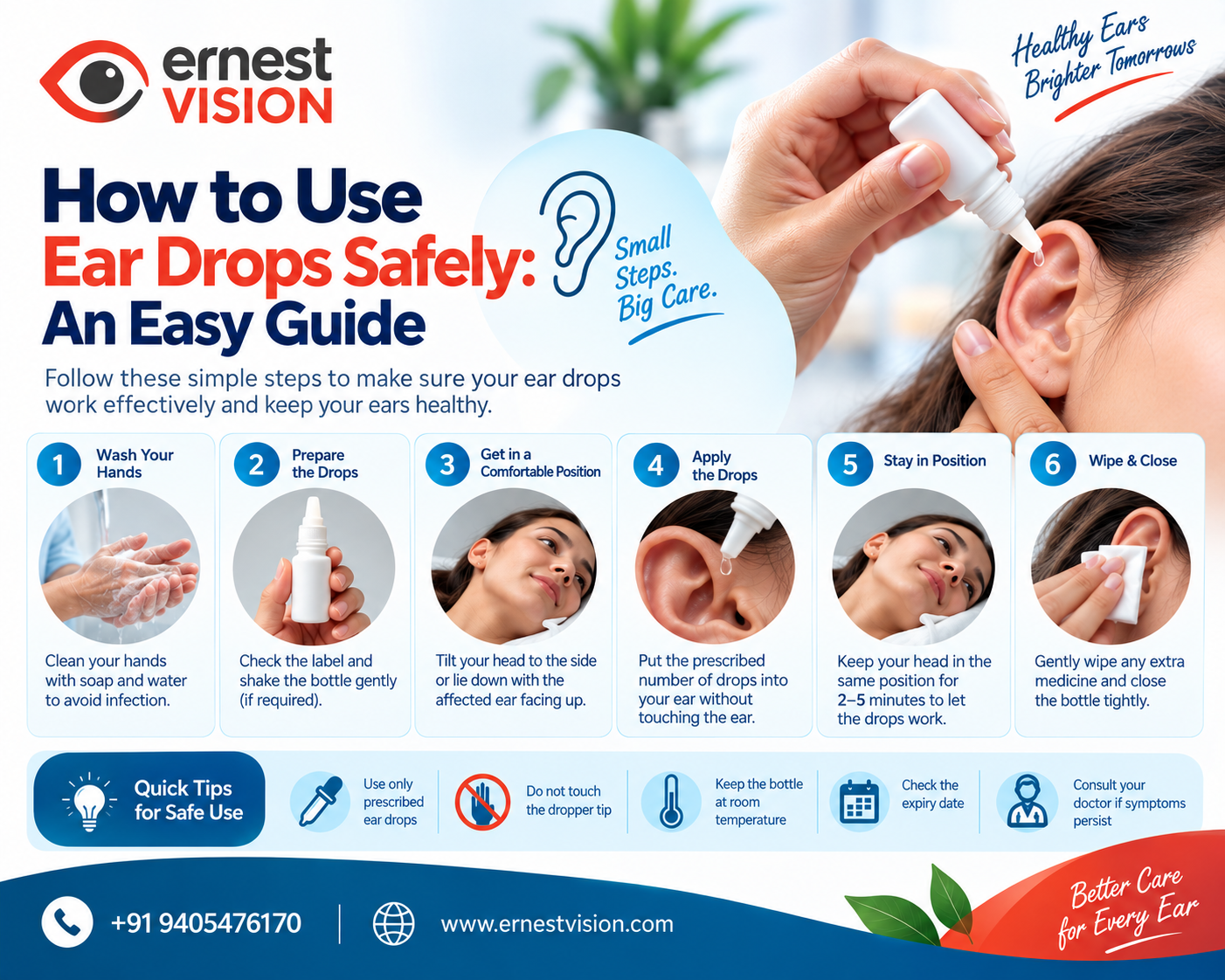
Ear drops are commonly used as part of ear treatment for a variety of problems, including ear infections, inflammation, earwax buildup, and itching. Although applying ear drops may seem simple, using them incorrectly can prevent the medicine from reaching the ear canal properly. If you have been prescribed ear drops, understanding how to use ear drops correctly can make the treatment process easier and more effective. The right technique involves more than simply squeezing the bottle. Your hand position, the position of your head, the amount of medicine, and how long you remain still afterward all matter.
This step-by-step guide explains the correct way to apply ear drops and some common mistakes you should avoid.
Why Are Ear Drops Used?
Ear drops are medicines or solutions that are designedbe applied directly into the ear canal. Depending on their ingredients, they may be recommended for different ear conditions. Some ear drops are used for ear infections, while others may help with inflammation, irritation, or excessive earwax. Certain products are specifically designed to soften hardened earwax, while prescribed medicated drops may contain antibiotics, antifungal medicines, steroids, or other ingredients. For this reason, the right ear drop depends on the cause of your symptoms. Ear pain, ear itching, blocked ears, and discharge can have different causes and may require different treatments.
How to Use Ear Drops Correctly
Knowing how to apply ear drops properly can help ensure that the medicine reaches the affected area. Follow these steps unless your doctor or the medicine label gives you different instructions.
1. Check the Ear Drops
Before opening the bottle, check the medicine name, expiry date, dosage, and instructions. Make sure the drops are intended for your particular condition and confirm which ear needs treatment. Some ear drops need to be shaken before use, while others do not. It is important to follow the instructions that come with the medicine. If the bottle has been open for some time, check whether the manufacturer specifies a limited period for use after opening.
2. Wash Your Hands
Wash your hands completely with soap and water before applying the drops. Clean hands help reduce the possibility of transferring bacteria or other contaminants to the ear or the dropper. This is particularly important when using medicated drops for an infection.
3. Make Sure the Drops Are Comfortable
Freezing ear drops can sometimes cause temporary discomfort or dizziness. If recommended for your particular medicine, hold the closed bottle in your hand for a few minutes so that it reaches a more comfortable temperature. Do not heat ear drops in a microwave, on a stove, or using very hot water. Medicines should be handled according to their storage instructions.
4. Position Yourself Properly
Sit comfortably or lie down with the affected ear facing upward. If you are applying the drops yourself, lying on your side can make it easier to keep the ear in the correct position. If you are helping someone else, make sure they are comfortable and able to remain still. Children may need help from an adult to apply the drops.
5. Gently Straighten the Ear Canal
For adults, pull the outer ear gently up and back. This helps straighten the ear canal and allows the drops to move more easily inside. For young children, the outer ear is generally gently pulled downward and backward. The ear should be handled gently. Never pull forcefully or insert the dropper deep into the ear canal.
6. Apply the Prescribed Number of Drops
Hold the bottle or dropper close to the ear opening, but do not touch the ear. Place the required number of drops in the ear canal. If you are wondering how to put ear drops in, one of the most important things to remember is not to push the dropper into the ear. The tip should remain just above the opening. Avoid touching the dropper tip to your ear, fingers, hair, or another surface. Such contact can contaminate the medicine. Use only the amount recommended by your doctor or stated on the medicine label. Applying extra drops does not necessarily make the medicine work faster.
7. Allow the Medicine to Spread
After applying the drops, gently massage the area in front of the ear if instructed for your particular medicine. The small flap of cartilage in front of the ear canal is called the tragus. With some ear drops, gently pressing this area can help move the liquid further into the ear canal. Do not press hard, particularly if the ear is painful or inflamed.
8. Stay in Position
Keep the affected ear facing upward for several minutes after applying the drops. Many ear-drop instructions recommend remaining in this position for around five minutes, although the appropriate time can vary depending on the product. This step is easy to overlook, but it gives the medicine time to coat the ear canal rather than immediately running back out.
9. Wipe Away Excess Liquid
When you sit up, you may notice a small amount of liquid coming out of the ear. This can happen and does not necessarily mean that the treatment has failed. Gently wipe the outside of the ear with a clean tissue. Do not use cotton buds to push the liquid or wax deeper into the ear.
10. Close the Bottle
Replace the cap securely after use and store the medicine according to the instructions on the label. Avoid leaving the bottle open unnecessarily, and do not share prescription ear drops with another person. Wash your hands after completing the application.
Ear Drops for Common Ear Problems
The type of ear drops used depends on what is causing the symptoms. Understanding the difference is important because not every product is suitable for every ear condition.
Ear Infections
Ear infections can affect different areas of the ear and have various causes. Some infections may require medicated ear drops, while others may require a different form of treatment. If you have symptoms such as pain, discharge, swelling, reduced hearing, or tenderness around the ear, a healthcare professional can determine the appropriate ear infection treatment. Do not assume that an antibiotic ear drop is appropriate for every infection.
Ear Itching
Itching in ear can occur for several reasons. Irritation, dry skin, allergies, excessive cleaning, earwax, or an infection may all contribute to itching. Although it may be tempting to scratch inside the ear or use ear drops without knowing the cause, such actions can sometimes make irritation worse. If ear itching continues, becomes severe, or occurs along with pain or discharge, it is worth having the ear examined.
Earwax Buildup
Earwax normally protects the ear canal, but excessive buildup can sometimes cause a blocked sensation, reduced hearing, or discomfort. Certain ear drops are specifically formulated to soften earwax. These are different from medicated drops used to treat infections. If you suspect impacted earwax, use only a product recommended for this purpose and follow its instructions carefully.
Mistakes to Avoid When Using Ear Drops
Even when you have the correct medicine, certain habits can interfere with treatment.
Using Too Many Drops
Always use the prescribed amount. More drops do not necessarily provide faster or better results.
Touching the Dropper
Do not allow the dropper tip to touch the ear canal or another surface. Keeping the tip clean helps to avoid contamination.
Inserting Cotton Buds
Cotton buds can push wax further into the ear canal and may irritate or injure the delicate skin . They should not be used to clean deep inside the ear.
Using Someone Else's Medicine
Never assume that another person's ear drops will be suitable for you. Even if the symptoms appear similar, the underlying problem may be different.
Using Old or Expired Drops
Check the expiry date and follow the manufacturer's instructions about how long the medicine can be used after opening. If the solution looks unusual or the packaging has been damaged, ask a pharmacist before using it.
Stopping Prescribed Treatment Early
If your doctor has prescribed a course of medicated ear drops, follow the recommended schedule and duration. If symptoms improve quickly, do not automatically stop treatment unless your healthcare professional tells you to do so.
When Should You Avoid Using Ear Drops Without Medical Advice?
Some ear conditions require an examination before drops are used. Be particularly careful if you have a history of a perforated eardrum, ear surgery, ear tubes, or unexplained bleeding or discharge. Certain ear drops may not be appropriate when the eardrum is not intact. You should also seek medical attention if you experience sudden hearing loss, severe ear pain, significant dizziness, bleeding, or symptoms that are rapidly getting worse. These symptoms should not simply be treated at home with over-the-counter ear drops.
How to Make Ear Drop Treatment Easier
If you find it difficult to apply the drops yourself, ask a family member or caregiver to help. Keep the medicine and instructions together so that you can easily check the dosage each time. If you use more than one type of ear drop, ask your doctor or pharmacist if you need to space them out.
Following a consistent routine can also help you remember each dose.
A useful sequence is:
Wash your hands → Check the medicine → Position the ear → Apply the prescribed drops → Remain still → Wipe excess → Close the bottle.
When to See an Eye and Ear Specialist
Not every ear problem requires the same type of ear treatment. Symptoms such as pain, itching, blocked hearing, discharge, or irritation can have several possible causes. If your symptoms persist despite treatment, repeatedly return, or become more severe, arrange an examination with a qualified healthcare professional. An examination can help identify whether the problem is related to an infection, earwax, irritation, inflammation, or another condition and whether ear drops are appropriate.