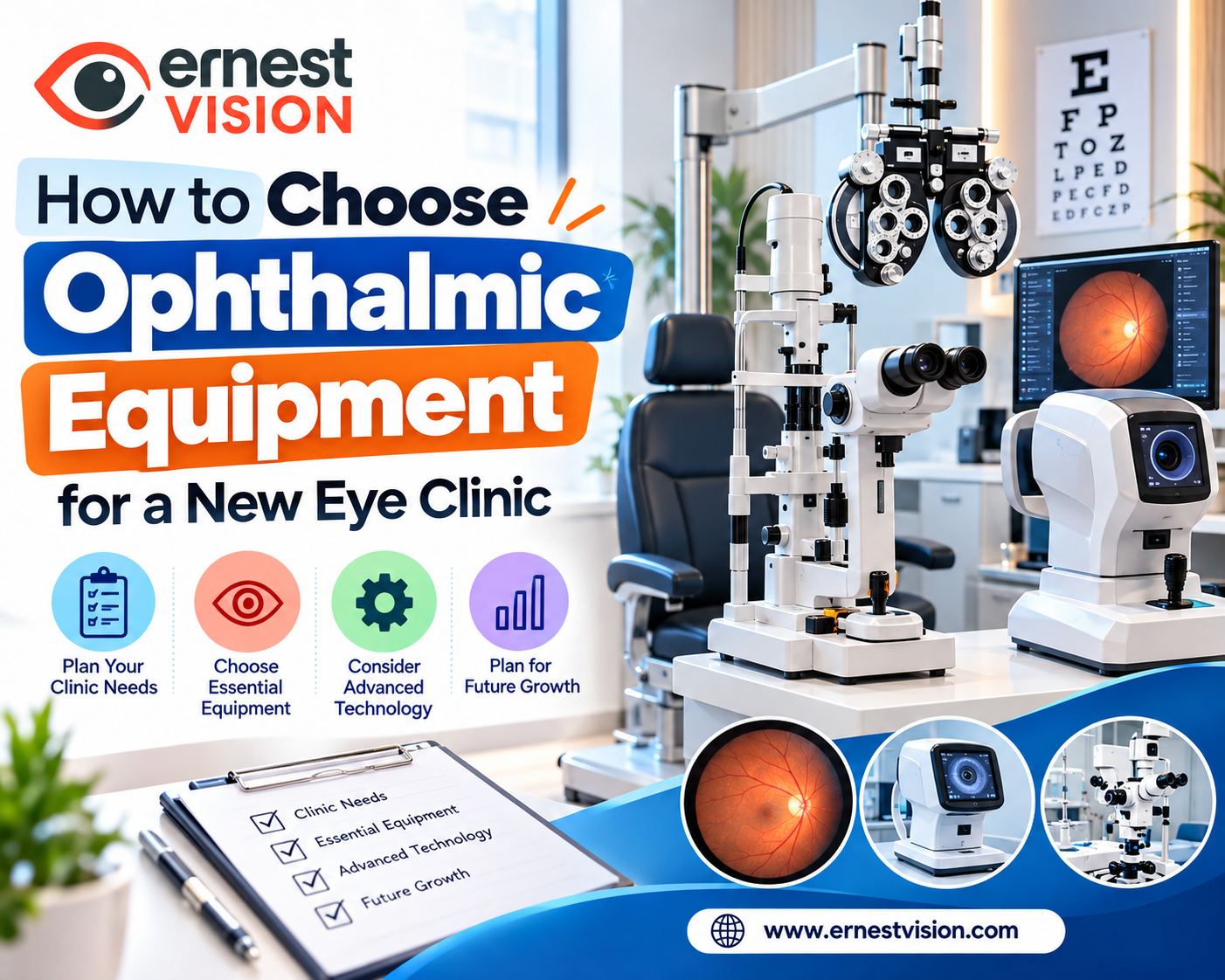
Opening a new eye clinic involves many decisions, but choosing the right equipment is one of the most important. The instruments you select will affect daily examinations, patient flow, diagnostic capabilities, and the services your clinic can provide. However, a new clinic does not necessarily need every advanced machine from the first day. A better approach is to understand your clinical needs, start with essential ophthalmic equipment for eye clinic use, and add specialized systems as the practice grows. Here is a simple guide to help you plan your setup.
Start With the Services Your Clinic Will Provide
Before preparing an eye clinic equipment list, decide what type of patients and eye conditions the clinic will handle. Will the clinic mainly provide routine eye examinations and vision testing? Will it also offer glaucoma screening, cataract assessment, retinal evaluation, or surgical services? A clinic focused on routine consultations may initially need examination and refraction equipment. A cataract or surgical center may require additional equipment for biometry, imaging, and surgery. Planning around actual clinical services helps avoid buying expensive equipment that may remain underused. 1. Slit Lamp for Detailed Eye Examination
A slit lamp for eye clinic use is one of the fundamental pieces of examination equipment. It provides a magnified view of different structures at the front of the eye, including the cornea, conjunctiva, iris and lens. When comparing slit lamps, look at illumination quality, magnification options, ease of movement, patient comfort and the space available in the examination room. Some clinics may also consider digital imaging compatibility when documentation or image sharing is part of their workflow. 2. Autorefractor and Refraction Equipment
Refraction is a common part of everyday eye care. An autorefractor provides an objective measurement of refractive error and can make the initial stage of vision testing faster. A complete refraction area may also include a trial lens set, trial frame, retinoscope, phoropter, and visual acuity chart. When choosing these devices, think about patient volume and workflow. A small clinic may begin with a simpler setup, while a busy center may benefit from more automated equipment. 3. Tonometer for Eye Pressure Measurement
A tonometer measures intraocular pressure (IOP), making it an important part of many eye examinations and glaucoma assessments. Different types are available, including applanation, non-contact, and handheld tonometers. Instead of choosing a model just for its features, consider how often it will be used, who will operate it, patient comfort, and maintenance requirements. The most suitable technology depends on the clinic's clinical workflow and professional requirements. 4. Ophthalmoscope for Fundus Examination
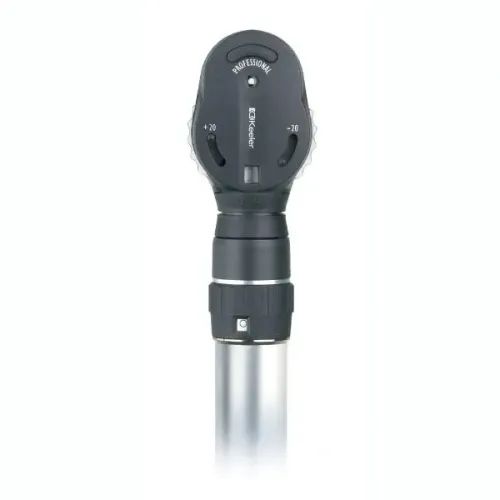
An ophthalmoscope allows eye-care professionals to examine internal structures of the eye, including the retina and optic disc. Direct and binocular indirect ophthalmoscopes serve different examination needs. A new clinic should select equipment according to the type and depth of examination it plans to provide. Portability, illumination, ergonomics, and ease of handling are practical factors worth considering. 5. Consider Advanced Diagnostic Equipment Carefully
Modern ophthalmic diagnostic equipment can significantly expand what a clinic is able to examine and document. Depending on the speciality, this may include: - OCT systems
- Fundus cameras
- Visual field analyzers
- A-Scan and B-Scan ultrasound
- Optical biometers
- Pachymeters
- Corneal topographers
- Specular microscopes
These systems can be valuable, but every new clinic may not require all of them immediately. For example, a clinic focused on glaucoma may place greater importance on tonometry, visual field testing, and OCT. A cataract-focused practice may prioritize biometry and corneal measurements. A retina clinic may require more advanced retinal imaging. Matching equipment to the clinic's specialty is usually more practical than buying every available technology.
6. Do Not Forget Basic Clinic Equipment
Large diagnostic machines often receive the most attention, but smaller equipment also influences everyday efficiency. A practical ophthalmology clinic equipment setup may include an examination chair, instrument table, doctor stool, vision chart, diagnostic lenses, and appropriate storage. Room layout matters too. Staff should be able to move comfortably between instruments, while patients should not need to change position unnecessarily during routine testing. Good equipment planning is therefore also about creating a smooth examination workflow. 7. Check Service, Training, and Maintenance
The purchase price should not be the only factor when selecting eye examination equipment. Before buying, ask how calibration and maintenance are handled. Check whether technical support, spare parts, user training, installation guidance, and warranty support are available. Equipment that looks economical initially may become difficult to use if servicing or replacement parts are not easily available. For frequently used devices, reliable after-sales support can be particularly important. 8. Think About Your Clinic's Future
A new clinic may start with basic examinations and later introduce imaging, specialised diagnostics or surgical services. When possible, choose equipment that can fit into this future plan. Consider whether devices can integrate with imaging or patient-record systems and whether accessories or upgrades can be added later. This approach can reduce the need to replace equipment simply because the clinic has expanded.
Plan Your Eye Clinic Equipment
Instead of purchasing everything together, divide your requirements into three groups.
Essential: Equipment needed for routine examinations from the first day, such as a slit lamp, refraction tools, visual acuity system, tonometer, and ophthalmoscope.
Service-specific: Equipment required for the particular services offered by your clinic, such as a biometer, visual field analyzer, or fundus camera.
Future expansion: Advanced technology that can be added when patient volume or specialist services increase.
Frequently Asked Questions (FAQs)
1. What equipment is essential for a new eye clinic?
Basic ophthalmic equipment for a new eye clinic may include a slit lamp, autorefractor or refraction tools, tonometer, ophthalmoscope, visual acuity chart, trial lens set and examination chair.
2. How do I prepare an eye clinic equipment list?
Start by identifying the services your clinic will provide. Separate your eye clinic equipment list into essential examination equipment, speciality-specific devices and equipment that can be added later.
3. Is a slit lamp necessary for a new eye clinic?
A slit lamp is commonly used in ophthalmic practice because it allows detailed examination of the front structures of the eye, including the cornea, iris and lens.
4. What is the purpose of an autorefractor?
An autorefractor provides an objective measurement of refractive error. It can help make the initial refraction process faster before further vision assessment.
5. Which tonometer is suitable for an eye clinic?
The choice depends on clinical requirements and workflow. Common options include applanation, non-contact and handheld tonometers. Consider accuracy requirements, patient volume, ease of use and maintenance.
6. Does every new eye clinic need an OCT machine?
Not necessarily. OCT can be useful for detailed retinal and optic nerve imaging, but whether it is required initially depends on the clinic's speciality, patient profile, budget and services.
7. What advanced ophthalmic diagnostic equipment can be added later?
Depending on the clinic's needs, advanced ophthalmic diagnostic equipment may include OCT, fundus cameras, visual field analyzers, optical biometers, A-Scan/B-Scan systems, pachymeters and corneal topographers.
8. What should I check before purchasing ophthalmic equipment?
Consider clinical purpose, ease of use, available space, equipment quality, warranty, installation, staff training, calibration, maintenance and availability of technical support.
9. Should a new clinic buy all ophthalmic equipment at once?
Not always. Many clinics can begin with essential eye examination equipment and add specialised technology as patient volume and clinical services expand.
10. How can an eye clinic plan equipment for future growth?
Choose equipment according to current requirements while considering future services. Where relevant, check whether systems support upgrades, accessories, digital imaging or integration with clinic records.