
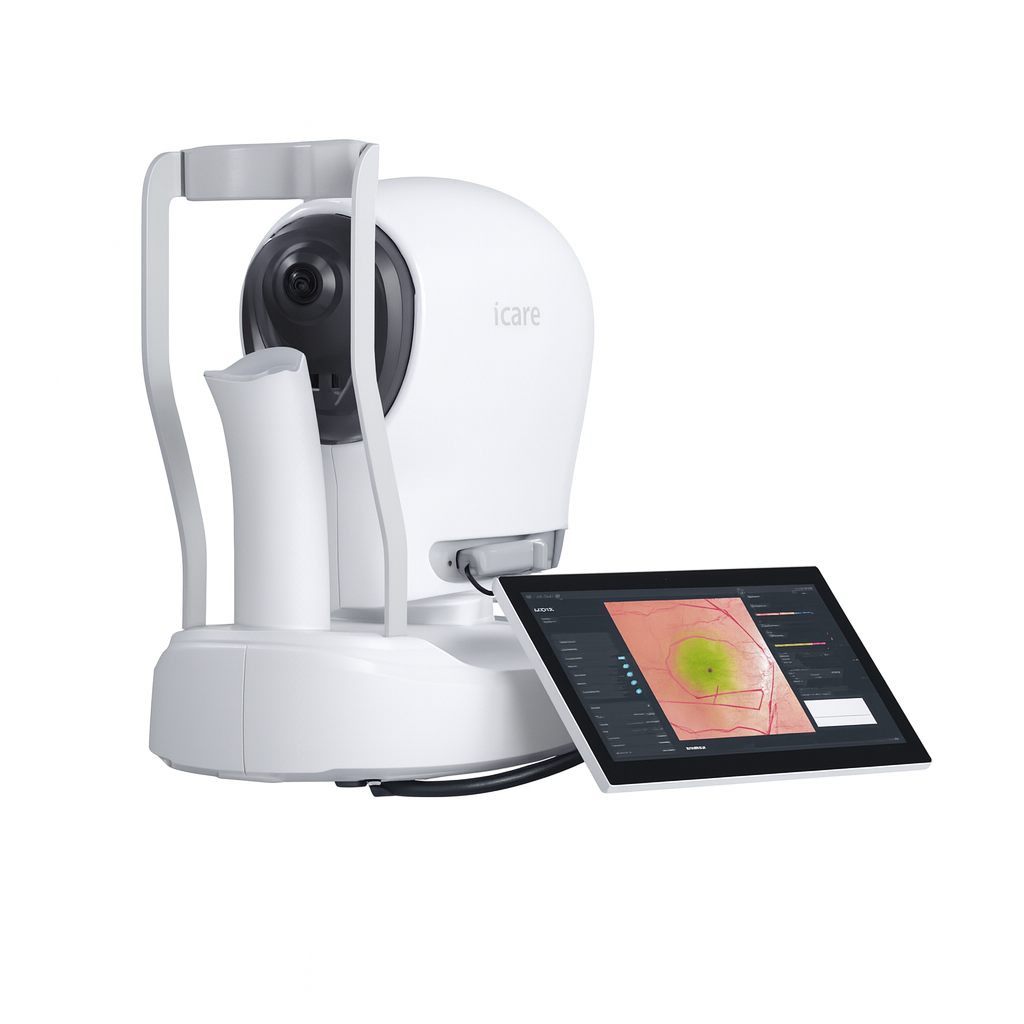
The iCare MAIA is a world-leading microperimeter designed for precise evaluation of macular function and fixation behavior. It combines fundus-guided perimetry, confocal SLO imaging, and automated tracking technology, making it an essential diagnostic tool for retina specialists, ophthalmology clinics, hospitals, and research centers.
🔍 Key Features of iCare MAIA
1. Confocal SLO TrueColor Fundus Imaging
-
High-resolution 850 nm confocal imaging
-
Clear visualization of macular pathology
-
Minimal light exposure for maximum patient comfort
2. High-Precision Microperimetry
-
Real-time fundus tracking ensures accurate retinal sensitivity mapping
-
Measures differential light threshold and fixation stability
-
Ideal for detecting early functional loss in macular disease
3. Fixation Analysis & Quantification
-
BCEA (Bivariate Contour Ellipse Area) fixation metrics
-
Perfect for monitoring patients with low vision and unstable fixation
4. Automated Eye Tracking & Auto-Alignment
-
Ensures consistent, repeatable results
-
Reduces operator dependency
-
High repeatability across follow-up sessions
5. User-Friendly Interface & Fast Workflow
-
Intuitive touchscreen operation
-
Automated follow-up mode aligns future tests with baseline
-
Compact, clinic-friendly design
🩺 Clinical Applications
iCare MAIA is used globally for diagnosis and monitoring of:
-
Age-Related Macular Degeneration (AMD)
-
Diabetic Retinopathy
-
Macular Edema
-
Central Serous Retinopathy (CSR)
-
Inherited Retinal Disorders
-
Low Vision Evaluation & Rehabilitation
-
Pre & Post-operative Macular Assessment
📊 Technical Highlights
-
Microperimetry range: 0–36 dB
-
Field of view: 30° × 30°
-
Stimulus: Goldmann III
-
Eye tracking speed: 25 Hz
-
Fixation target: Multiple selectable patterns
-
Confocal imaging: High contrast, glare-free
🏥 Why Clinics Choose iCare MAIA
✔ Most advanced microperimetry system globally
✔ Predicts functional impact of retinal disease
✔ Enhances monitoring of treatment outcomes (anti-VEGF, laser therapy, etc.)
✔ Supports early intervention and better patient management