
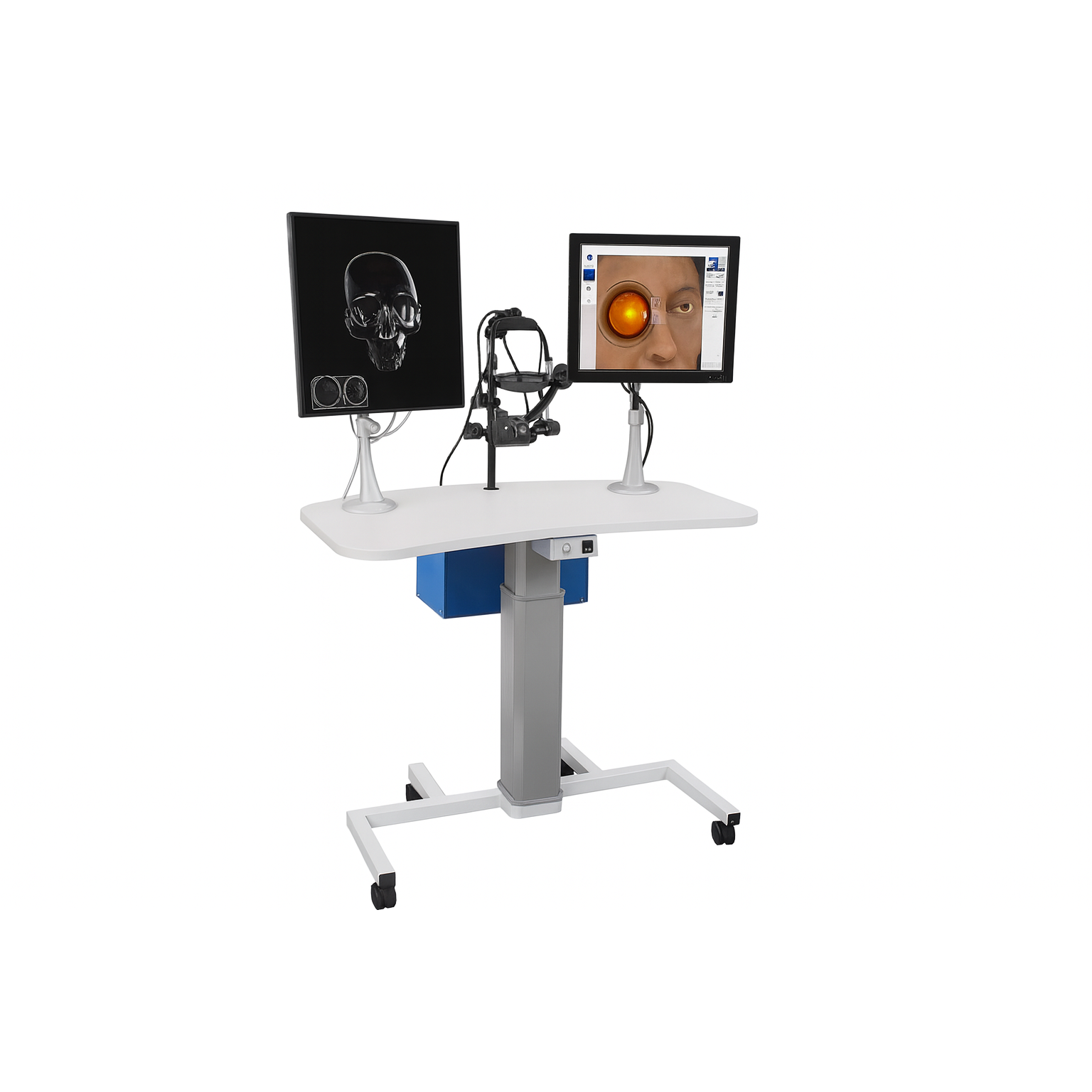
Eyesi Indirect Ophthalmoscope is a high-fidelity virtual reality training simulator designed to teach and refine indirect ophthalmoscopy skills in a realistic, immersive, and risk-free environment. It is widely used in ophthalmology residency programs, medical colleges, and skill development centers to help learners master posterior segment examination, retinal pathology interpretation, and hand–eye coordination without needing a patient.
The system replicates real-life patient examinations with 3D anatomical eye models, precise lens–light interactions, and motion-sensitive response tracking, giving trainees a true-to-life experience of binocular indirect ophthalmoscopy.
Powered by Ernest Pharmaceutical Group
(All brands under Ernest Pharmaceutical Pvt. Ltd.)
@ERNESTVISION | ERNEST PHARMACEUTICAL PVT LTD
For global exports, OEM branding & distributor partnerships:
📧 Email: exports@ernestpharmaceuticals.com 🌐 https://ernestpharmaceuticals.com/ | https://www.ernestvision.com/ | https://www.ernestimpex.com/
Sachin Kashiwar: WhatsApp link https://wa.me/919359902383
📲 WhatsApp: +91 9359902383
⭐ Key Features
True-to-life VR simulation of retinal anatomy and pathology
Realistic instrument handling with dynamic illumination and lens control
Wide case library including normal retina, diabetic retinopathy, retinal detachment, macular diseases & more
Interactive learning system with step-by-step tutorials
Performance analytics measuring examination completeness, steadiness, orientation & speed
Structured curriculum for beginners to advanced ophthalmology trainees
⭐ Training Applications
Examination of retina, optic disc, macula & peripheral findings
Skill development for binocular indirect ophthalmoscopy
Interpretation of posterior segment pathologies
Resident & specialist training programs
Competency-based assessment
⭐ Benefits
Eliminates patient discomfort & risk
Provides unlimited practice opportunities
Builds confidence in retinal examination techniques
Enables standardized training across all institutions
Shortens learning curve before real patient examinations