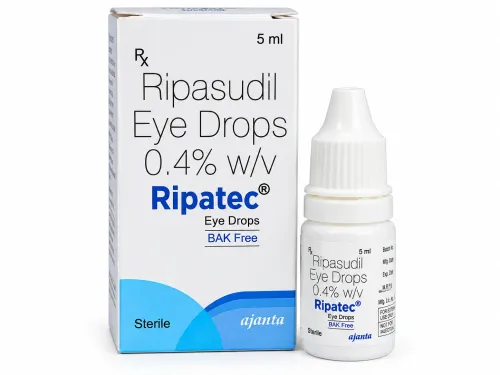
Ripatec 0.4% Ripasudil Eye Drops Supplier & Distributor in Nigeria RIPATEC 0.4% w/v Ripasudil Ophthalmic Solution Most glaucoma medicines are recognized by their ability to lower intraocular pressure. Ripasudil is particularly interesting because of where it acts. It belongs to a medicine class known as Rho-associated protein kinase (ROCK) inhibitors and acts on the conventional aqueous-humour drainage pathway. Ripatec 0.4% Product Profile Product Name: Ripatec Generic Name: Ripasudil Active Ingredient: Ripasudil Composition: Ripasudil 0.4% w/v Strength: 0.4% w/v Dosage Form: Eye Drops / Ophthalmic Solution Medicine Category: Anti-Glaucoma Medicine Therapeutic Segment: Ophthalmology Drug Class: Rho-Associated Protein Kinase (ROCK) Inhibitor Administration Route: Ophthalmic What Makes Ripasudil Different? Ripasudil belongs to the ROCK inhibitor class of ophthalmic medicines. Rather than duplicating the mechanism of traditional glaucoma drug classes, it targets the Rho kinase pathway involved in regulation of the conventional aqueous humour outflow pathway. By inhibiting ROCK activity, ripasudil can facilitate aqueous humour drainage through the trabecular pathway, contributing to a reduction in intraocular pressure. Where Ripatec Fits in Ophthalmic Care Ripasudil ophthalmic therapy may be considered for the reduction of elevated intraocular pressure in conditions such as - Glaucoma, according to locally approved indications - Ocular hypertension - Patients requiring additional intraocular-pressure management where clinically appropriate Patient Safety & Professional Use Ripasudil eye drops should be used under appropriate ophthalmic supervision. Conjunctival hyperaemia (eye redness) is a recognized adverse effect. Other ocular reactions can include irritation, discomfort, blepharitis or allergic conjunctival reactions in some patients. Proper Eye-Drop Handling The dropper tip should not touch the eye, eyelid, fingers or other surfaces because this may contaminate the solution. If other ophthalmic products are also being used, administration intervals should follow the ophthalmologist's instructions or the approved product information. Contact-lens instructions should likewise be followed according to the specific product label. Commercial Invoice | Packing List | Batch/Product Details | Certificate of Analysis (COA), where available | Certificate of Origin, where applicable | Shipping Documentation | Other available product documents The exact documents required for importation and distribution should be confirmed according to Nigerian regulatory requirements and the specific transaction. Why Product Documentation Matters for Ophthalmic Procurement Eye drops require careful handling because product quality depends not only on the active ingredient but also on the integrity of the finished ophthalmic formulation and packaging. Frequently Asked Questions 1. What is Ripatec 0.4% Eye Drops? Ripatec is a prescription ophthalmic preparation containing Ripasudil 0.4% w/v. 2. Which pharmacological class does ripasudil belong to? Ripasudil is a Rho-associated protein kinase (ROCK) inhibitor used as an intraocular-pressure-lowering medicine in markets where appropriately authorised. 3. How does ripasudil differ from many conventional glaucoma medicines? Its ROCK-inhibiting action targets resistance within the conventional aqueous-humour outflow pathway, helping facilitate drainage. 4. How much ripasudil does a 0.4% w/v solution contain? A 0.4% w/v concentration corresponds to 4 mg of ripasudil per mL of solution. 5. Is Ripatec suitable for ordinary red or dry eyes? No. Ripasudil is an active prescription ophthalmic medicine and should not be treated as a general lubricant or routine redness-relief drop. 6. Why can redness occur after using ripasudil? Conjunctival hyperaemia is a recognised ocular adverse effect associated with ROCK inhibition. Persistent or troublesome redness should be assessed by an eye-care professional. 7. Why should the dropper tip remain untouched? Keeping the tip away from the eye, eyelids, fingers and other surfaces helps reduce the risk of contaminating the ophthalmic solution. 8. Can Ripatec be administered together with another eye drop? Patients using multiple ophthalmic medicines should follow their ophthalmologist's instructions regarding administration order and appropriate spacing between drops. 9. What details should an ophthalmic distributor include in a Ripatec enquiry? A useful enquiry should specify Ripasudil 0.4% w/v, required bottle size, pack configuration, quantity, Nigerian destination, minimum shelf-life requirement and required documentation. 10. Why should the exact Ripatec pack be checked before bulk procurement? Bottle volume, commercial pack configuration, manufacturer details and remaining shelf life can affect both quantity calculations and procurement suitability, even when the active ingredient and concentration are unchanged.

Abuja, Nigeria
08048036879
+919405476170
 Chat with us
 Chat with us